
Let’s be honest — there’s nothing more frustrating than buying a gorgeous bunch of fresh mint or coriander, using a handful of leaves, and then watching the rest turn into a soggy, dark, limp mess within two days. Sound familiar? You’re definitely not alone. Millions of home cooks face this exact problem every single week, and most of them assume it’s just how herbs are — perishable, fragile, and destined for the bin.
But here’s the thing: fresh mint and coriander can last up to three full weeks when you store them correctly. Yes, three weeks. Not two days. Not five days. Three whole weeks of vibrant, crisp, aromatic herbs sitting right there in your fridge, ready to throw into curries, chutneys, salads, cocktails, and everything in between.
The secret isn’t some expensive gadget or a fancy kitchen hack. It’s actually a combination of simple, science-backed techniques that most people have never been taught. Understanding why herbs wilt, what causes soggy leaves, and how moisture and airflow interact in your fridge is the foundation of everything.
In this guide, you’ll get the full breakdown — from trimming techniques and the mason jar trick to damp paper towel methods, herb saver containers, and crisper drawer tips. By the end, you’ll never waste fresh herbs again.
Why Does Mint Wilt Quickly? The Science Behind the Slump
Before we fix the problem, we need to understand it. Why does mint wilt so quickly compared to, say, rosemary or thyme? The answer lies in the plant’s cellular structure and water content.
Mint and coriander are both high-moisture, soft-stemmed herbs. Their leaves contain a large amount of water held within cells, and once those cells begin to dehydrate — either from exposure to dry refrigerator air, ethylene gas from nearby fruits, or physical damage during handling — wilting begins almost immediately.
The Three Main Culprits
1. Dehydration from cold, dry fridge air Most refrigerators circulate cold, dry air to prevent bacterial growth. While that’s great for meat and dairy, it’s terrible for herbs. The dry air pulls moisture right out of those delicate leaves, causing them to wilt and shrivel within 24–48 hours if left unwrapped.
2. Ethylene gas exposure Fruits like apples, bananas, and avocados release ethylene gas as they ripen. This gas accelerates the aging process in nearby produce — including your herbs. Storing coriander next to a fruit bowl or in a fridge section near apples is basically putting it on a fast track to the compost bin.
3. Physical damage and bruising Coriander leaves are particularly delicate. When they’re squished, bent, or roughly handled, the cell walls break, moisture escapes, and oxidation kicks in. That’s how you get those dark, slimy patches that appear almost overnight.
The Mason Jar Herb Storage Trick That Changes Everything
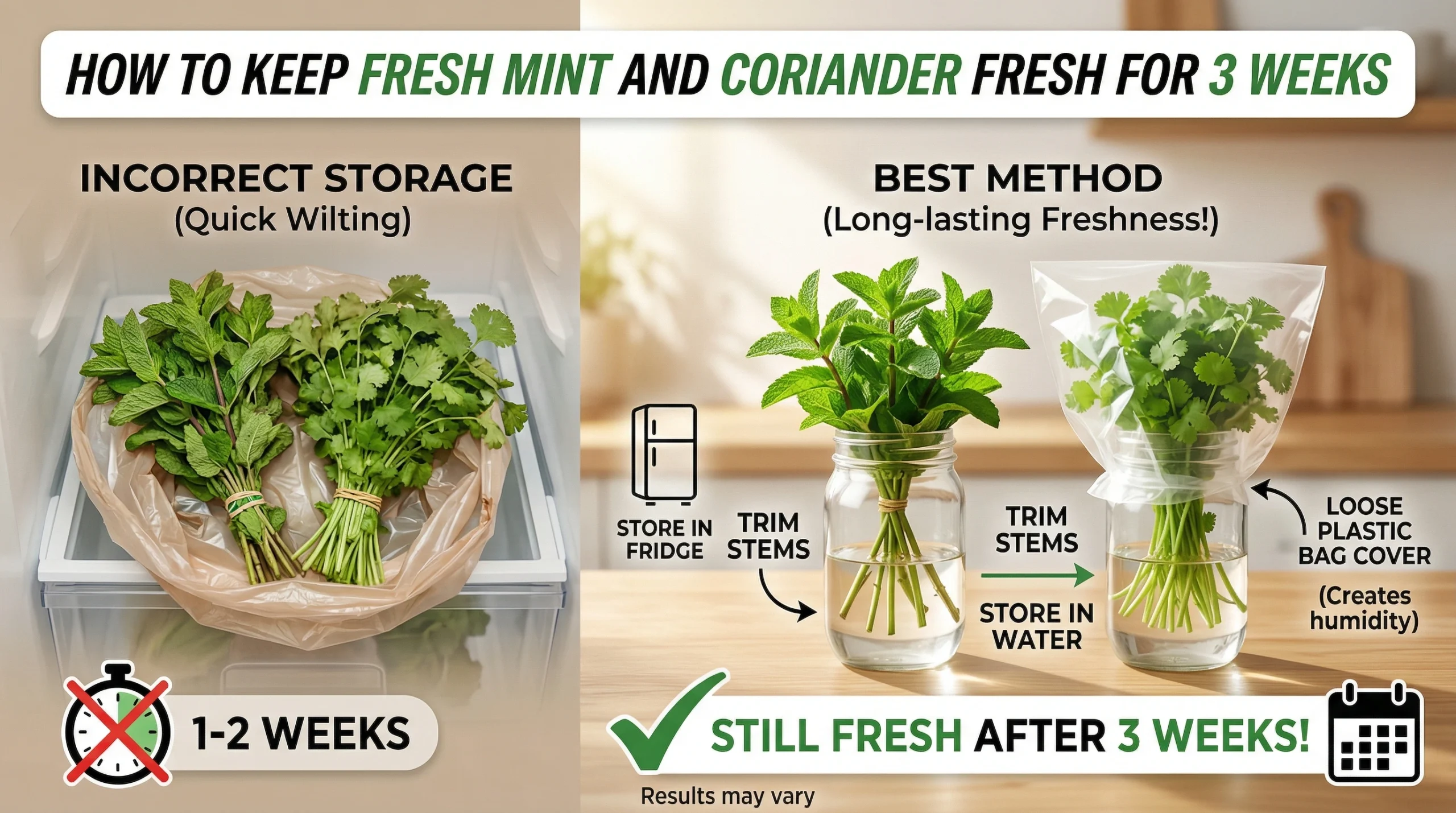
If there’s one method that consistently outperforms all others for both mint and coriander, it’s the mason jar herb storage trick. It mimics the way flowers are kept fresh — by keeping the stems hydrated while protecting the leaves from direct moisture and dry air.
How to Do It Step by Step
Step 1: Trim the stems properly This is non-negotiable. Before anything else, trim stems under water using a sharp pair of scissors or a knife. Cut about half an inch off the bottom of each stem at a slight angle. Doing this underwater prevents air bubbles from entering the stem, which can block water uptake. Think of it like cutting flower stems for a vase — the same principle applies.
Step 2: Fill a mason jar with an inch of cold water You don’t need much — just enough to submerge the very ends of the stems. Tap water works perfectly. Change it every two to three days to prevent bacterial buildup, which can cause the stems to rot prematurely.
Step 3: Place the herbs stem-down into the jar Arrange your mint or coriander loosely. Don’t pack them in tightly, as that causes bruising and restricts airflow between the leaves.
Step 4: Cover loosely with a plastic bag or wrap Place a loose plastic bag over the top of the herbs and the jar. This creates a mini humid environment that protects the leaves from the fridge’s dry air without trapping too much moisture — which would cause rot. A large zip-lock bag works brilliantly here.
Step 5: Store in the fridge door or a cool spot The fridge door tends to be slightly warmer than the main compartment, which suits mint and coriander well. Avoid the very back of the fridge where temperatures can dip below optimal.
With this method, mint can easily stay fresh and fragrant for two to three weeks, and coriander — usually the harder of the two to keep — can last a solid 10 to 14 days, sometimes longer.
The Damp Paper Towel Method: Perfect for Small Bunches
Not everyone has mason jars handy, and sometimes you’ve got a smaller amount of herbs to store. That’s where the damp paper towel method comes in. It’s simple, effective, and uses materials you almost certainly already have.
How the Damp Paper Towel Method Works
The goal here is to maintain just enough moisture around the leaves to prevent dehydration without creating the wet, airless conditions that cause sliminess and rot. It’s a delicate balance, but once you nail it, you’ll be amazed at how long your herbs last.
Here’s the process:
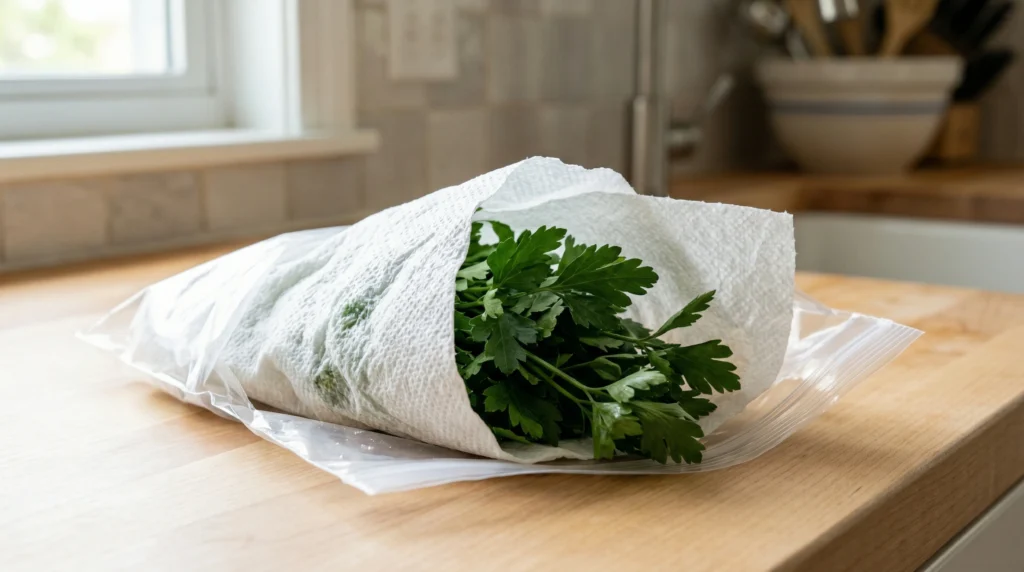
- Gently wash your herbs and pat them almost dry — you want them barely damp, not soaking wet.
- Lay a sheet of paper towel flat on your counter and lightly dampen it with water. Wring out any excess — it should feel like a moist (not wet) sponge.
- Lay the herbs in a single layer across the paper towel.
- Roll the paper towel loosely around the herbs, like a little herb burrito.
- Place the rolled bundle inside a zip-lock bag or an airtight container, leaving a tiny gap for airflow.
- Store in the crisper drawer of your fridge.
Replace the paper towel every three to four days or immediately if it becomes saturated. Wet paper towels that aren’t changed promptly become a breeding ground for mold and bacteria, which will ruin your herbs faster than doing nothing at all.
This method works especially well for coriander because the leaves are small and numerous — it’s hard to get them all in a jar without bruising them. The paper towel cradles them gently and keeps them perfectly perky.
How to Store Coriander Without a Fridge
Sometimes refrigeration isn’t an option — maybe you’re meal prepping at a campsite, staying somewhere without fridge space, or you’re planning to use the coriander within a day or two and prefer it at room temperature for maximum flavour release. Here’s how to store coriander without a fridge and keep it reasonably fresh.
The Counter-Top Water Glass Method
Place your coriander (stems trimmed, as always) into a glass or cup with about an inch of water — just like you would with a bunch of flowers. Keep it on the counter away from direct sunlight, heat sources, and ethylene-releasing fruits.
At room temperature, coriander will typically stay fresh this way for one to two days. Change the water daily to prevent bacterial growth. Cover loosely with a thin cloth or paper bag to slow moisture loss.
Why Room Temperature Storage Has Limits
At room temperature, enzymatic activity in the plant continues at a much faster rate than when chilled. This accelerates both wilting and flavor degradation. The essential oils in coriander — particularly linalool and geraniol, which give it that distinctive bright, citrusy scent — break down faster in warmth. So while room-temperature storage is workable in a pinch, the fridge is always going to give you longer-lasting, better-tasting results.
Fridge Crisper Drawer Tips: Make the Most of What You’ve Got
The fridge crisper drawer is one of the most underused tools in a home cook’s arsenal. Most people throw random produce in there without thinking twice, but there’s genuine science behind how to use it effectively — especially for herbs.
High Humidity vs. Low Humidity Drawers
Many modern fridges have two crisper drawers: one set to high humidity and one to low humidity. If yours has this feature:
- High humidity drawer: This is ideal for leafy greens, herbs, coriander, and mint. The higher moisture content in the air slows dehydration.
- Low humidity drawer: Better suited for fruits that emit ethylene gas, like apples and pears.
If your fridge only has one crisper drawer, designate it for your herbs and leafy greens, and keep fruits elsewhere.
Don’t Let Herbs Touch the Back Wall
The back wall of a fridge can sometimes get cold enough to cause frost damage on delicate herb leaves. Even mild freezing turns mint leaves black and mushy. Keep herbs toward the front of the drawer.
Avoid Overcrowding
Air needs to circulate around your herbs to keep them in good condition. A packed, overcrowded crisper drawer traps moisture and promotes mold growth. If you’re storing herbs alongside other vegetables, make sure there’s breathing room.
Herb Saver Containers: Are They Worth It?
You’ve probably seen herb saver containers pop up on kitchenware sites and social media. They’re purpose-built containers — usually with a small water reservoir at the bottom and a vented lid — designed to keep herbs fresh longer. But do they actually work?
What Makes a Good Herb Saver
The best herb saver containers do three things well:
- Maintain stem hydration via a built-in water reservoir
- Control airflow through venting to prevent moisture buildup
- Protect leaves physically from being squished or bruised
Brands like OXO, Prepara, and Herb Savor Pod are frequently praised by home cooks and professional chefs alike. They work on essentially the same principle as the mason jar method but with a purpose-built, tidier design.
The DIY Alternative
Honestly? A mason jar and a loose plastic bag perform just as well for most home cooks — and cost a fraction of the price. The herb saver container is a convenience product, not a necessity. If you’re buying fresh herbs every week and want a sleek, dedicated solution, it’s a worthwhile investment. If you’re just looking to stop herbs from wilting, the jar method is more than enough.
How to Avoid Soggy Leaves: The Most Common Mistakes People Make
Knowing how to avoid soggy leaves is just as important as knowing the right storage methods. Most of the time, sogginess is caused by avoidable mistakes made before the herbs even go in the fridge.
Mistake 1: Washing Before Storing (Without Drying Properly)
Washing herbs is good hygiene, but washing them and then storing them while still wet is a fast route to rot. Excess water sitting on leaves accelerates bacterial growth and causes those dark, slimy patches to appear. If you wash before storing, dry them thoroughly — a salad spinner works brilliantly for this — or pat gently with a clean cloth.
Mistake 2: Sealing Herbs in Airtight Bags With No Air
Completely sealing herbs in an airtight zip-lock bag traps ethylene and moisture with no escape route. Instead, leave a small gap or punch a tiny hole in the bag to allow minimal airflow.
Mistake 3: Storing Herbs Near Strong-Smelling Foods
Mint and coriander are aromatic sponges. They’ll absorb odours from nearby foods — onions, cheese, leftover fish — and it affects both their smell and their flavour. Store them away from pungent items in your fridge.
Mistake 4: Storing Mint in the Freezer for “Freshness”
Freezing whole mint leaves is a common mistake people make when trying to preserve them. While frozen mint works well for smoothies and cooking, it turns black and mushy when thawed because the water inside the cells expands during freezing and ruptures the cell walls. For fresh garnishing or tea, always use the fridge methods instead.
The Best Way to Keep Herbs Crisp: A Quick-Reference Summary
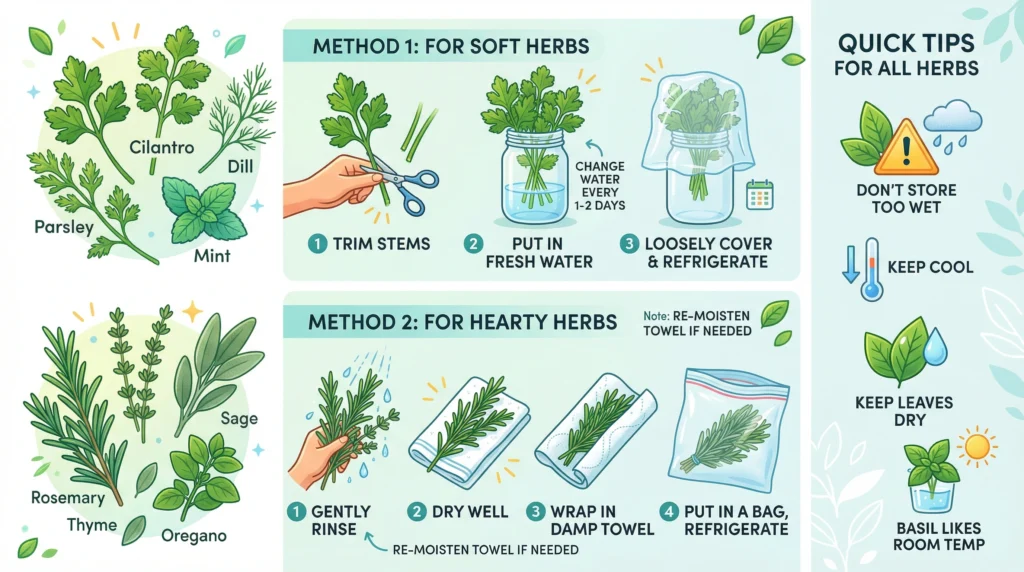
Let’s consolidate everything into one practical overview of the best way to keep herbs crisp:
| Method | Best For | Lasts |
|---|---|---|
| Mason jar with water | Mint, coriander | 2–3 weeks |
| Damp paper towel + bag | Coriander, small bunches | 1–2 weeks |
| Herb saver container | All fresh herbs | 2–3 weeks |
| Counter water glass | Short-term (no fridge) | 1–2 days |
| Crisper drawer (high humidity) | All herbs | Boosts any method |
The single most impactful thing you can do — regardless of which storage method you choose — is trim the stems under water before storing. This one step alone can add several days of freshness.
How to Revive Wilted Herbs Before It’s Too Late
Even with the best storage methods, sometimes life gets in the way and you come back to slightly wilted mint or drooping coriander. Don’t throw them out just yet — there’s a good chance you can revive them.
The Ice Bath Revival
Fill a bowl with cold water and a handful of ice cubes. Submerge the wilted herbs completely and let them sit for 15 to 30 minutes. The cold water causes the plant cells to reabsorb moisture rapidly, often restoring crispness almost completely. This works best for mint and is surprisingly effective even for coriander that’s only mildly wilted.
Re-trimming the Stems
If the stems have become slimy or discoloured at the bottom, trim them fresh (under water, remember!) and place the herbs back in a jar of fresh water in the fridge. Give them a few hours to perk back up before using.
Conclusion: Fresh Herbs for Weeks, Not Days
Here’s the bottom line: keeping fresh mint and coriander crisp and vibrant for up to three weeks is completely achievable — and it doesn’t require a trip to a specialty store or a complicated routine. It comes down to understanding why herbs wilt in the first place, and then applying a handful of simple, consistent habits every time you bring them home.
Trim the stems under water. Use the mason jar trick or the damp paper towel method depending on what you have. Store in the crisper drawer at high humidity, away from ethylene-producing fruits and strong-smelling foods. Avoid soggy leaves by drying herbs before storage and not sealing them in completely airtight bags. And if they start to wilt, revive them with an ice bath before giving up.
Whether you’re a home cook trying to reduce food waste, a meal prepper looking for reliable ingredient management, or just someone who loves having fresh herbs on hand for that finishing touch — these methods will genuinely transform how long your herbs last. The next time you buy that beautiful bunch of coriander or fresh mint, you won’t be watching it wilt with resignation two days later. You’ll be reaching for it, still bright and fragrant, three weeks down the line.
Fresh herbs, fresher cooking. That’s a win worth having.
Frequently Asked Questions About Storing Fresh Mint and Coriander
Can I freeze mint and coriander for long-term storage?
Yes, but with caveats. Freezing works well when you plan to use herbs in cooking — blended into sauces, added to curries, or stirred into soups. The best method is to blend fresh herbs with a little water and freeze them in ice cube trays. Once frozen, transfer the cubes to a zip-lock bag. Do not expect frozen-then-thawed herbs to look or feel fresh — they’ll be dark and soft, fine for cooking but not for garnishing.
Why does my coriander turn yellow so quickly?
Yellowing in coriander is usually a sign of nitrogen deficiency or stress, which accelerates after harvest. It can also be triggered by exposure to ethylene gas, extreme cold (frost damage), or the natural breakdown of chlorophyll as the plant ages. To slow yellowing, use the mason jar method, change the water regularly, and keep coriander away from ethylene-producing fruits.
Should I wash herbs before storing or just before using?
Just before using is generally better. Washing before storage introduces moisture that can accelerate bacterial growth and rot, even with the best drying technique. The exception is if the herbs are visibly dirty or you’re using the damp paper towel method, in which case a careful wash and thorough drying beforehand is appropriate.
Does the type of container matter for herb storage?
Yes, it does. Glass mason jars maintain a more stable temperature than plastic containers and don’t absorb odours or stains. Plastic containers can sometimes hold on to the strong smell of previous herbs (particularly coriander), which can affect flavour over time. If using plastic, ensure it’s BPA-free and thoroughly cleaned between uses.
How do I know if my mint or coriander has gone bad?
Look for these signs: dark or black leaves, a slimy texture, a sour or off smell, or extensive yellowing across most of the bunch. A few slightly discoloured leaves near the bottom of the bunch are normal — just remove those and the rest is likely fine. When in doubt, smell it. Fresh coriander has a bright, clean scent. Bad coriander smells musty, sour, or vaguely like old dishwater.
Can I store mint and coriander together in the same jar?
You can, but it’s not ideal. Mint and coriander have different hydration needs and their strong aromatic compounds can influence each other’s flavour over time. If you must combine them, make sure neither bunch is overcrowding the other, and plan to use them within five to seven days.