
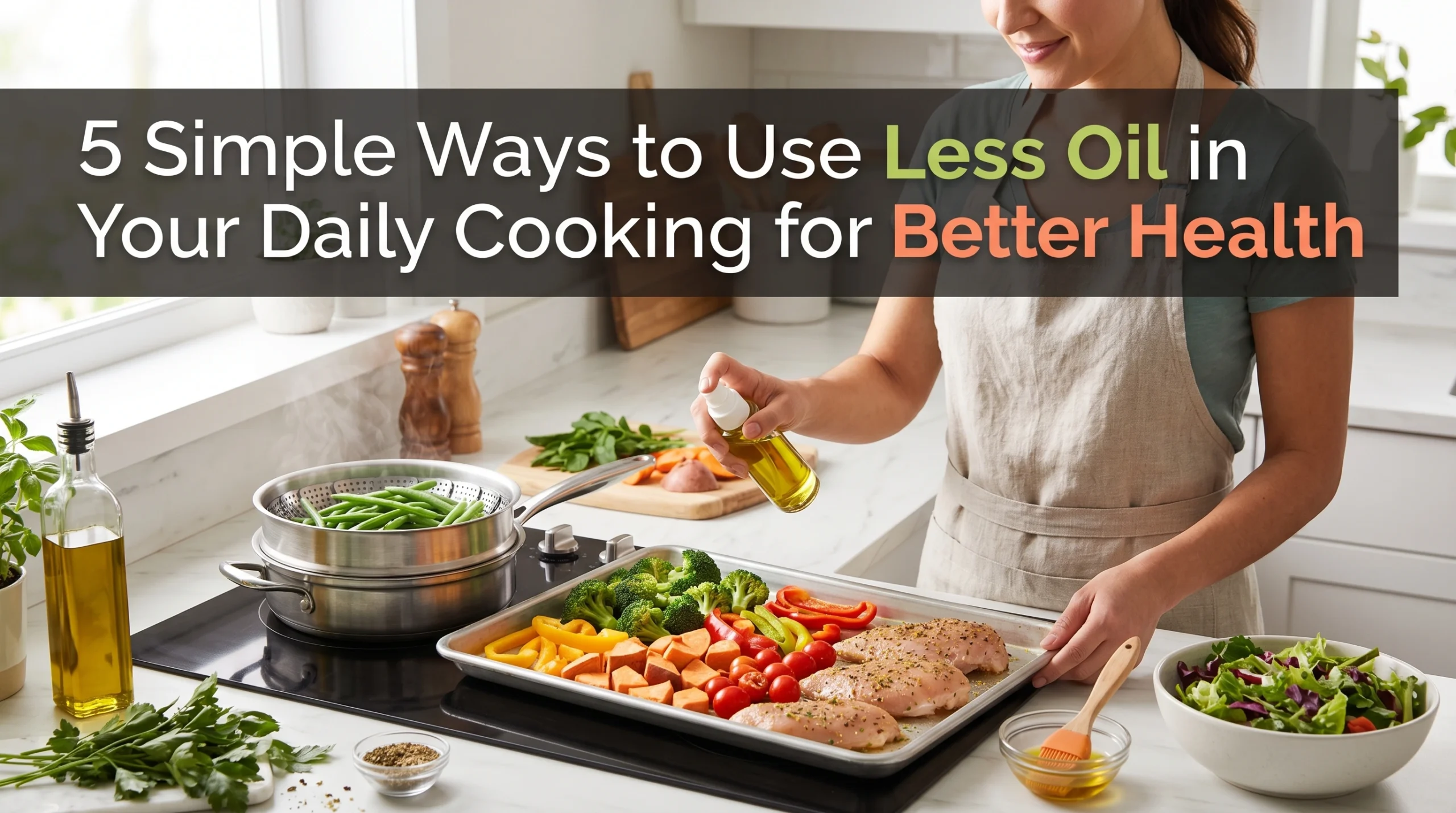
Let’s have a heart-to-heart about your kitchen habits. We live in a world that is practically obsessed with the sizzle. From the deep-fried snacks at the local fair to the glistening stir-fries in our favorite takeout boxes, oil seems to be the “glue” holding the culinary world together. But here is the kicker—while fat is a necessary macronutrient, the sheer volume of oil we consume daily is often staggering and unnecessary. If you have been searching for how to use less oil in cooking, you aren’t just looking for a simple recipe change; you are looking for a lifestyle revolution that will redefine your relationship with food. Learning to reduce oil intake is one of the most effective ways to slash hidden calories, improve cardiovascular health, and finally rediscover the actual, vibrant taste of your ingredients.
Believe it or not, most of the oil we use in the kitchen is habitual rather than functional. We splash olive oil into a pan because that’s what we saw on a celebrity cooking show, or we deep-fry potatoes because we think it’s the only way to achieve that satisfying crunch. However, mastering low-fat cooking techniques can unlock a world of flavor that isn’t masked by heavy, greasy fats. The benefits of less oil in food extend far beyond the numbers on a bathroom scale; they include better digestion, clearer skin, and a significant reduction in systemic inflammation. In this comprehensive guide, we are going to dive deep into oil-free cooking methods and practical strategies that will help you transform your kitchen into a health sanctuary without sacrificing a single ounce of deliciousness. Get ready to cook smarter, live better, and eat more than ever before.
The Hidden Truth About Fats Why You Need to Reduce Oil Intake Right Now

When we talk about how to use less oil in cooking, we have to address the “calorie-dense” elephant in the room. Oil, regardless of whether it is “healthy” cold-pressed avocado oil or highly processed vegetable oil, contains roughly 120 calories per single tablespoon. It is the most calorie-dense food on the planet. For many home cooks, a simple dinner prep involves three or four tablespoons of oil, adding nearly 500 calories to a meal before a single vegetable has even been chopped or a protein seasoned. By focusing on healthy cooking tips that prioritize moisture and heat over fat, you can create a massive caloric deficit without ever feeling deprived or hungry. This is the secret to how to use less oil in cooking for sustainable weight management.
Understanding the Caloric Impact of Excess Oil in Modern Diets
It is incredibly easy to underestimate how much oil we actually consume when we aren’t measuring. A “drizzle” is rarely just a teaspoon; it’s often a flood. Most people accidentally pour 300-400 calories of fat into their salads and pans every single day without realizing it. If you want to master low-fat cooking techniques, you first have to visualize those calories. Imagine eating 10 large apples; that is roughly the caloric equivalent of just a few tablespoons of oil. By choosing to reduce oil intake, you are essentially making room for more nutrient-dense whole foods. Oil-free cooking methods allow you to eat *more* food for *fewer* calories, which is the ultimate “hack” for longevity and vitality.
The Cardiovascular Benefits of Less Oil in Food
Beyond the waistline, the benefits of less oil in food are deeply rooted in heart health. High oil consumption, particularly oils high in omega-6 fatty acids or saturated fats, can contribute to arterial plaque buildup and elevated cholesterol levels. When you shift toward oil-free cooking methods, you allow your vascular system to breathe. You’ll notice that after just a week of implementing low-fat cooking techniques, that “heavy” or “lethargic” feeling after a meal completely disappears. You’ll have more energy because your body isn’t spending hours of metabolic effort trying to process a grease bomb. This transition is about moving from a “fat-rich” diet to a “flavor-rich” lifestyle.
The Science of Smoke Points and Oxidative Stress
Why High-Heat Frying Might Be Damaging Your Health
One of the most overlooked healthy cooking tips involves understanding smoke points. When oil is heated past its stability point, it oxidizes and creates free radicals. By learning how to use less oil in cooking, you reduce your exposure to these inflammatory compounds. Many low-fat cooking techniques avoid high-heat oil altogether, ensuring that your food remains a source of nourishment rather than a source of oxidative stress. This is a critical component of oil-free cooking methods that many people ignore until they see the benefits of less oil in food firsthand.
1. Master the Art of Liquid Sautéing: A Key Low-Fat Cooking Technique
The most common use of oil is for sautéing onions, garlic, and mirepoix at the start of a meal. Most people believe that oil is an absolute necessity to prevent sticking and to develop flavor. This is a total culinary myth. How to use less oil in cooking starts with mastering the “liquid sauté.” Instead of coating your pan in shimmering oil, use small amounts of water, vegetable broth, or even a splash of white wine or verjus. This oil-free cooking method relies on the steam and the natural sugars in the vegetables to create a delicious, caramelized base.
When you use water or broth, the vegetables soften beautifully and release their own juices. If the pan starts to look dry or things begin to stick, you simply add another tablespoon of liquid. This is one of the best healthy cooking tips because it prevents the vegetables from becoming greasy and allows their natural sweetness to shine through without being smothered. You will find that onions sautéed in broth have a much cleaner, more delicate flavor profile than those drenched in heavy oil. This is a foundational step in learning how to use less oil in cooking for everyday meals.
Using Vegetable Broth and Water Instead of Butter or Lard
If you are looking to reduce oil intake during your evening meal prep, keep a carton of low-sodium vegetable broth on the counter at all times. Broth adds an extra layer of umami and depth that plain water lacks. When you use this low-fat cooking technique, you are essentially “steam-frying” your food. The heat is transferred efficiently, and the result is tender, flavorful produce. This is one of the most effective oil-free cooking methods for those who are transitionally moving away from high-fat diets and want to see the immediate benefits of less oil in food.
2. Invest in High-Quality Non-Stick Cookware and Modern Gadgets
You cannot expect to successfully reduce oil intake if you are constantly fighting against an old, scratched stainless steel pan that causes food to stick like glue. To successfully implement oil-free cooking methods, you absolutely need the right tools. High-quality ceramic or heavy-duty non-stick pans are essential. These surfaces are designed to release food easily, meaning you can fry an egg or sear tofu with literally zero oil. This is a foundational healthy cooking tip for anyone serious about long-term health. When the equipment does the work, how to use less oil in cooking becomes second nature.
Why the Air Fryer is the Ultimate Tool for Oil-Free Cooking Methods
If there is one gadget that has revolutionized how to use less oil in cooking, it is the air fryer. An air fryer is essentially a high-powered convection oven that circulates hot air at high speeds. This creates a “crunch” and texture that is remarkably similar to deep frying but uses 90-95% less oil. You can toss potatoes in a tiny spritz of oil (or none at all) and get crispy, golden fries. This is the king of low-fat cooking techniques because it satisfies the psychological craving for fried textures without the health consequences. Using an air fryer is a top-tier healthy cooking tip for families who aren’t ready to give up their favorite comfort foods but want to reduce oil intake.
3. Steam and Poach: The Secret to Retaining Nutrients and Natural Moisture
We often overlook the simplest low-fat cooking techniques because they seem “boring” or clinical. However, steaming and poaching are powerhouse methods for anyone wondering how to use less oil in cooking. Steaming is perhaps the cleanest way to prepare food. It preserves the vibrant colors, crisp textures, and—most importantly—the water-soluble vitamins (like Vitamin C and B-complex) that are often lost or degraded in other cooking methods. By opting for these oil-free cooking methods, you are maximizing the nutritional density of every bite.
Poaching is another brilliant oil-free cooking method. By simmering proteins like fish, chicken breast, or even fruit in a flavorful liquid (like ginger-infused water, coconut water, or a herb-heavy broth), you keep the food incredibly moist without needing any fat. The benefits of less oil in food are most apparent here; you taste the freshness of the ingredients rather than the heavy residue of a frying pan. If you want to know how to use less oil in cooking while keeping meat succulent, poaching is your best friend.
4. Utilize Oil Misters for Precise Portion Control and Even Distribution
Sometimes, a recipe truly does need a tiny bit of oil for a specific texture or to help absorb fat-soluble vitamins (A, D, E, and K). In these cases, the “free pour” is your worst enemy. If you want to know how to use less oil in cooking, you must switch to an oil mister. A standard bottle of oil pours out hundreds of calories in seconds. A mister, however, breaks the oil into tiny droplets, allowing you to coat a large surface area with just a fraction of a teaspoon. This is one of the most practical healthy cooking tips for everyday life.
Using a mister allows you to reduce oil intake by up to 90% in dishes like roasted vegetables, homemade granola, or grilled meats. You still get the benefits of less oil in food—such as that slight crispiness and golden color—without the caloric density of traditional frying. This simple change in your low-fat cooking techniques can lead to significant weight loss over time. If you can’t see the oil pooling, you’re less likely to over-consume it. Transitioning to oil-free cooking methods is often just a matter of breaking the “pour” habit and replacing it with a “mist” habit.
5. Boost Flavor with Acids, Fresh Herbs, and Toasted Spices
One of the biggest fears people have when learning how to use less oil in cooking is that the food will taste bland or like “cardboard.” Fat carries flavor, but it is not the *source* of flavor. To compensate for the lack of oil, you need to lean heavily into “flavor bombs.” Acids like lemon juice, lime juice, and various vinegars (balsamic, rice, apple cider, or sherry vinegar) provide a brightness and “zip” that mimics the sharp bite of fat. This is a key low-fat cooking technique used by professional chefs.
Fresh herbs and toasted spices are also essential for oil-free cooking methods. When you reduce oil intake, your palate becomes much more sensitive to the subtle nuances of different seasonings. You’ll find that a squeeze of fresh lime and a dusting of smoked paprika can do more for a dish than a tablespoon of butter ever could. These healthy cooking tips focus on building layers of taste using zero-calorie or low-calorie ingredients, ensuring that your journey of how to use less oil in cooking is one of culinary discovery rather than deprivation.
Using Citrus and Vinegar to Mimic the Satisfying Mouthfeel of Fat
The “mouthfeel” of oil is often what we miss most when we try to reduce oil intake. Interestingly, high-quality vinegars, especially aged balsamic or reduction glazes, have a syrupy consistency that provides a similar satisfaction on the tongue. Using citrus zest is another pro low-fat cooking technique. The essential oils in the skin of the fruit are incredibly potent and provide that “fatty” aroma and richness without the actual liquid fat. This is a game-changer for those seeking the benefits of less oil in food while maintaining a high standard of gourmet flavor.
The Long-Term Benefits of Less Oil in Food for Total Wellness
When you consistently apply these healthy cooking tips, the long-term results are nothing short of transformative for your health and well-being. By learning how to use less oil in cooking, you are proactively protecting your heart and managing your weight effortlessly. But there’s more to it than just physical metrics. Many people report that they finally “taste” vegetables for the first time in their lives. The heavy coating of oil often masks the subtle bitterness of kale, the earthiness of beets, or the delicate sweetness of a summer carrot. By adopting oil-free cooking methods, you are awakening your taste buds.
Furthermore, a diet low in processed oils is often a naturally anti-inflammatory diet. This can lead to reduced joint pain, better sleep quality, and improved cognitive function. The benefits of less oil in food touch every aspect of human physiology. By adopting low-fat cooking techniques and oil-free cooking methods, you are making a profound investment in your future self. You will feel lighter, think clearer, and enjoy your meals with a new sense of appreciation for the raw power of whole food ingredients.
Frequently Asked Questions (FAQs) About How to Use Less Oil in Cooking
1. Can I really sauté vegetables without any oil at all?
Absolutely! This is one of the most effective oil-free cooking methods. Simply use a high-quality non-stick pan and add a tablespoon of water or vegetable broth whenever the vegetables start to stick or the pan gets too dry. This low-fat cooking technique is called liquid sautéing, and it works perfectly for onions, peppers, mushrooms, and almost any vegetable you can think of. It allows the natural flavors to caramelize without the added fat.
2. Does food taste different when you reduce oil intake?
Initially, your palate might notice a difference because we are culturally conditioned to crave the mouthfeel and “greasiness” of fat. However, within a week or two, your taste buds will “reset” and become much more sensitive. You will start to appreciate the natural, vibrant flavors of your ingredients. Using healthy cooking tips like adding citrus, vinegars, and fresh herbs helps bridge the gap during the transition period.
3. Is an air fryer actually better than a regular oven for low-fat cooking techniques?
Generally, yes. While a convection oven works on a similar principle, the compact size and much higher air velocity of an air fryer make it far more efficient at removing surface moisture. This creates a “fried” texture with literally a fraction of the oil (or no oil at all). It is a vital tool for anyone wondering how to use less oil in cooking while still enjoying the “crunch” of comfort foods like fries or breaded chicken.
4. What are the best oils to use if I absolutely have to use some?
If a recipe truly requires oil for structural reasons, opt for those with high smoke points like avocado oil for heat, or use heart-healthy options like extra virgin olive oil for finishing. The key is to use an oil mister to reduce oil intake rather than pouring it straight from the bottle. This ensures you get the benefits of less oil in food while still achieving the desired culinary result.
5. Will I lose weight if I start focusing on how to use less oil in cooking?
Since oil is the most calorie-dense food on the planet (120 calories per tablespoon), reducing its use is one of the fastest and easiest ways to lower your daily caloric intake without reducing the volume of food you eat. Most people see a noticeable difference in their weight, bloating levels, and energy shortly after switching to low-fat cooking techniques and oil-free cooking methods.
Conclusion
Transitioning to a lifestyle that prioritizes how to use less oil in cooking is perhaps the most impactful and rewarding change you can make in your kitchen. It isn’t about deprivation or eating bland food; it’s about culinary liberation. It’s about freeing your ingredients from the heavy, greasy shroud that masks their true, vibrant flavor. By embracing oil-free cooking methods like liquid sautéing, steaming, and air frying, you are choosing a path of vitality, energy, and long-term health.
The benefits of less oil in food are scientifically undeniable—from a healthier cardiovascular system to a leaner, more energetic physique. Remember to use your tools wisely, from ceramic non-stick pans to precision oil misters, and never underestimate the power of fresh herbs, spices, and acids to bring a dish to life. As you consciously reduce oil intake, you’ll find that your cooking becomes more creative, your ingredients become more vibrant, and your health reaches new heights. Start with just one meal today, and soon, these low-fat cooking techniques will become your new, delicious reality. Your body, your heart, and your taste buds will thank you for the change!