

Let’s be real for a second. You’ve been there. You buy a nice bag of fresh lemons, toss a few into your water, zest one over some pasta, and then… life happens. Two weeks later, you pull out what looks like a lemon but feels like a rock-hard tennis ball. Sound familiar?
You’re not alone. Most people have no clue how to keep lemons from drying out, and that’s money literally shriveling up in your fruit bowl. But here’s the good news: you don’t need a fancy vacuum sealer or a second refrigerator to fix this.
What if I told you there’s a lemon storage hack for months that keeps every single citrus fruit as plump and juicy as the day you brought it home? Yeah, you read that right. Months.
In this guide, we’re throwing out the old myths about lemon fridge vs room temperature debates. You’re going to learn the best way to store fresh lemons using a trick so simple, it’s almost stupid. We’re talking about a lemon preservation easy method that works for whole lemons, cut lemons, and even your leftover lemon juice.
By the time you finish reading, you’ll never waste another sour fruit again. Let’s dive into the juiciest secret your kitchen has been missing.
Why Your Lemons Keep Turning into Tiny Yellow Bricks
Before we fix the problem, we need to understand why it happens. You’ve probably noticed that lemon not turning hard is basically a miracle in your kitchen. But why do they harden in the first place?
Lemons are alive after being picked. I know—weird, right? They still respire. They still lose moisture through their pores (called stomata). When you leave them sitting on a counter at room temperature, they’re sweating out their internal water supply 24/7. The air sucks that moisture away, and the cell walls start collapsing.
The result? A dry, pithy mess with zero juice.
Here’s the kicker. Most folks think the fridge solves everything. It helps, sure. But a standard fridge is also a dehydrator. The cold air inside is extremely dry. So while the cold slows down spoilage, the dry air still pulls moisture out of the peel. That’s why even refrigerated lemons eventually turn into shriveled disasters after three weeks.
You need a method that locks humidity in while keeping air out. And that’s exactly what we’re about to build.
The Big Mistake Lemon Fridge vs Room Temperature (Spoiler: Both Fail)
Let’s settle this debate once and for all. Should you store lemons for months without fridge or rely on the refrigerator?
- Room temperature lemons: Last about 1–2 weeks. They look pretty in a bowl, but they dry out fast. High humidity helps a little, but unless you live in a swamp, they’re doomed.
- Fridge lemons (loose): Last 3–4 weeks. Better, but still prone to drying and absorbing weird odors from leftover pizza and onions.
- Fridge lemons in a plastic bag: Last 4–6 weeks. This is getting warmer, but condensation becomes an enemy. Wet lemons grow mold fast.
Neither option gets you to that three-month mark. Not even close.
The secret? You have to control the microclimate around the fruit. You need something that mimics a cool, humid root cellar. And no, you don’t need a cellar. You just need water.
The Ultimate Lemon Storage Hack for Months (The Water Bath Method)
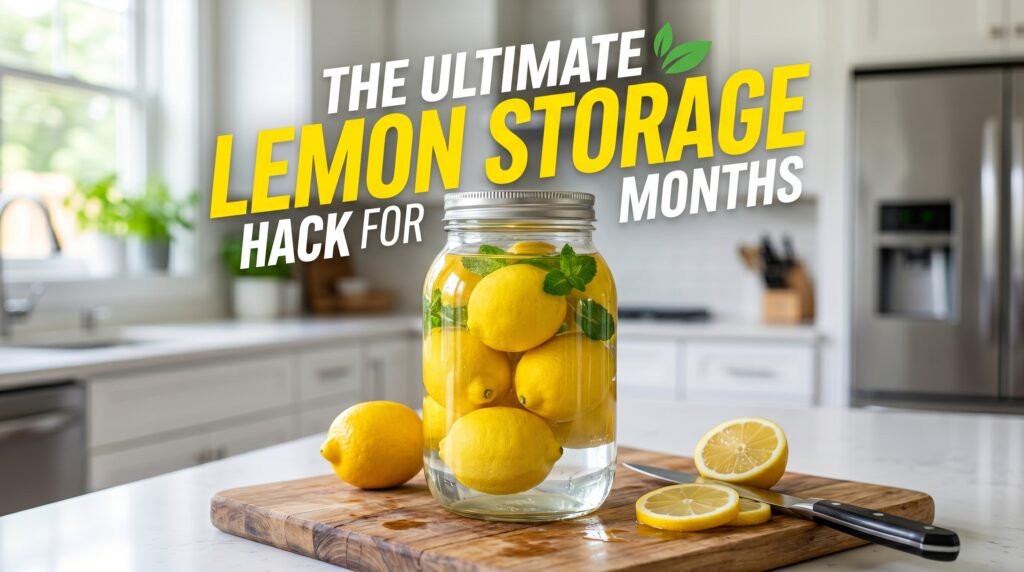
Alright, stop scrolling. This is the lemon storage hack for months that actually works. It’s been used by grandmas in Mediterranean villages for decades, and it’s about to blow your mind.
Here’s the best way to store fresh lemons long-term:
What You’ll Need:
- Fresh, unblemished whole lemons (organic is better, but any works)
- A large glass jar or BPA-free plastic container with a tight lid
- Filtered water (tap water is fine if yours isn’t heavily chlorinated)
- Optional: A tablespoon of salt or vinegar (for preservation boost)
The Step-by-Step Process to Keep Lemons Juicy in Water Hack
Step 1: Select Your Lemons Wisely
Don’t use lemons that already have soft spots, cuts, or mold. Those are goners. You need firm, bright yellow fruit with smooth skin. The lemon preservation easy method starts with quality fruit.
Step 2: Wash and Scrub
Rinse your lemons under cool water. Use a veggie brush to scrub off any wax, dirt, or residues. Commercial lemons often have a thin wax coating. That’s fine, but you want a clean surface.
Step 3: Fill Your Jar with Water
Place your lemons inside the jar. Pour in enough cool filtered water to completely submerge them. Every lemon must be fully underwater. No floating shoulders. No air pockets.
Step 4: Seal It Tight
Close the lid firmly. You want an airtight seal. This prevents new oxygen from entering and stops the water from evaporating.
Step 5: Put It in the Fridge (The Right Spot)
Pop that jar into your refrigerator. Not the door (too warm). Put it in the main compartment, preferably toward the back where temperatures are most consistent.
That’s it. Seriously.
Why This Works (The Science Is Beautiful)
When you submerge lemons in water, you’re doing three brilliant things:
- You block oxygen. Oxygen is what triggers ripening and eventual decay. No oxygen means the lemons essentially hit the pause button on aging.
- You create 100% humidity. The water surrounds every inch of the peel. The lemon can’t lose moisture because it’s literally bathing in it. That’s how to keep lemons from drying out perfectly.
- You prevent mold spores. Mold needs air to grow. Underwater, those spores never get a foothold.
Using this keep lemons juicy in water hack, your fruit will stay fresh, plump, and bursting with juice for 3 to 5 months. I’ve personally pulled lemons out after four months that felt heavier and juicier than fresh store-bought ones.
How to Store Whole Lemons for 3 Months Without a Fridge
Wait—what if your fridge is packed? Or you’re living off-grid? Can you store whole lemons for 3 months without any electricity?
Yes. But you’ll need a different approach.
The Cool Dark Pantry Method
If you have a basement, a cellar, or even a consistently cool closet (below 60°F/15°C), you can use a variation of the water method without refrigeration.
- Use the same submersion in water technique.
- Keep the jar in the darkest, coolest corner of your home.
- Change the water every 2 weeks to prevent stagnation.
- Check for any floating debris.
This method won’t get you five months. But you’ll easily hit 8–10 weeks of fresh lemons. For most people, that’s plenty.
Pro tip: Add a teaspoon of apple cider vinegar to the water. It lowers the pH and keeps bacteria from throwing a party.
Keep Cut Lemons Fresh for Weeks (Yes, Cut Ones)
Now let’s talk about the half-lemon sitting naked on a plate in your fridge. You know the one. It’s already starting to look like a dried-up desert relic.
Here’s how to keep cut lemons fresh for weeks without wasting a single slice.
Method 1: The Upside-Down Trick
Place your cut lemon face-down on a small ceramic or glass plate. The flat flesh seals against the smooth surface, creating a makeshift barrier against air. Then wrap the whole plate in plastic wrap or put it inside a sealed container. This keeps the exposed flesh moist for 7–10 days.
Method 2: Submerge Cut Pieces Too
Yes, you can submerge cut lemons in water just like whole ones. Place wedges or halves in a small jar, cover with water, and refrigerate. Change the water every 3 days. The flesh will stay fresh for 2–3 weeks. The only downside? The cut edges might get slightly waterlogged, but the juice inside remains perfect.
Method 3: The Freezer Slice Stash
If you really want keep cut lemons fresh for weeks (okay, months), freeze them. Slice your lemons into rounds or wedges. Lay them on a baking sheet lined with parchment. Freeze for 2 hours. Then transfer to a freezer bag. Frozen lemon slices last 6 months and go straight into your water or tea.
Lemon Storage Jar or Bag? Which One Wins?
You’ll see a million blog posts arguing about lemon storage jar or bag. Let me end the confusion.
Plastic bags are okay for short term (2–4 weeks). But they have two fatal flaws:
- They trap ethylene gas (the ripening hormone) which actually speeds up aging.
- Condensation forms inside, leading to mold on the peel.
Glass jars with water obliterate both problems. The water dilutes ethylene gas and makes it harmless. And since the lemons are fully submerged, condensation doesn’t matter—they’re already wet.
Winner by a landslide: Glass jar.
If you absolutely must use a bag, poke 10–15 small holes in it for airflow and add a paper towel to absorb excess moisture. But honestly, just switch to the jar method.
Keep Lemon Juice Fresh (Because Freshly Squeezed Is Gold)
Squeezed a bunch of lemons for a recipe and now you have leftover juice? Don’t you dare pour it down the sink.
Here’s how to keep lemon juice fresh for months without losing that bright, tangy flavor.
The Ice Cube Tray Genius Move
Pour your fresh lemon juice into an ice cube tray. Freeze it solid. Pop out the cubes and store them in a freezer bag. Each cube is roughly 1 tablespoon of juice.
These cubes last 6–8 months. Drop one into salad dressing, marinades, or a glass of water. It tastes 90% as good as fresh-squeezed. Far better than that bottled stuff with preservatives.
Refrigerated Juice Storage
If you’ll use the juice within 2 weeks, just pour it into a small glass jar with a tight lid. Fill it to the very top to minimize air exposure. Refrigerate. Give it a sniff before using—fresh lemon juice should smell bright, not fermented.
Pro tip: Add a thin layer of olive oil on top of the juice in the jar. The oil blocks air contact and extends fridge life to 3–4 weeks.
Lemon Preservation Easy Method

Before refrigerators existed, people still enjoyed lemons year-round. How? Salt.
This lemon preservation easy method comes from North African and Indian cuisine. It’s called preserved lemons, and it’s a game-changer.
What You Do:
- Slice lemons into quarters but don’t cut all the way through—keep them attached at the base.
- Pack coarse salt (lots of it) into the cuts and all over the outside.
- Stuff the salted lemons into a sterilized glass jar.
- Squeeze fresh lemon juice over them until they’re fully submerged.
- Seal the jar and leave it at room temperature for 3–4 weeks.
The result? Soft, intensely flavorful lemon rinds that are amazing in tagines, stews, and salads. The juice becomes a salty, sour condiment.
These preserved lemons last 1 year on your counter. No fridge required. The only catch? They’re not for eating raw. You rinse off the salt and use the rind in cooking.
Common Mistakes That Ruin Your Lemon Storage Efforts
Even with the best way to store fresh lemons, people mess up. Avoid these errors like the plague.
Mistake #1: Not Drying the Outside Before the Water Hack
Wait—didn’t I just say to submerge them in water? Yes. But if your lemons have visible surface mold or dirt, that mold will spread in the water. Always wash and pat dry before putting them into the fresh storage water.
Mistake #2: Using Warm Water
Warm water encourages bacterial growth. Always use cold, filtered water straight from the fridge or tap.
Mistake #3: Forgetting to Change the Water
For the store lemons for months without fridge method (pantry version), you must change the water every 2 weeks. Stagnant water grows biofilm and ruins everything. For fridge storage, change it once a month or when it looks cloudy.
Mistake #4: Storing Bruised Lemons
One bad lemon spoils the whole jar. Inspect every single fruit. If it has a soft spot, use it now or throw it out. Don’t put damaged fruit into long-term storage.
How to Make Lemons Last Longer at Home (Daily Habits)
Beyond the big hacks, small daily habits add up. Here’s how to make lemons last longer at home without turning your kitchen into a science lab.
- Buy in small batches unless you’re using the water method. Only bulk-buy if you plan to submerge.
- Remove the stem nubs before storing. That little green button is where moisture escapes fastest.
- Store away from apples and bananas. These fruits release massive amounts of ethylene gas. Keep your lemons far away from them.
- Don’t wash until you’re ready to use. Washing removes natural protective coatings. Wash right before cutting or storing via water method.
- Use the oldest lemons first. FIFO (first in, first out) applies to fruit too.
Frequently Asked Questions
1. Can you freeze whole lemons?
Absolutely. Freeze whole lemons directly as they are. No prep needed. Pop them in a freezer bag. When you need juice, microwave the frozen lemon for 30 seconds, then roll it hard on the counter. It will release as much juice as a fresh one. The texture of the peel gets mushy, but the juice inside stays perfect for 6 months.
2. Does putting lemons in water make them last longer?
Yes—that’s the entire premise of this guide. Submerging lemons in cold water inside a sealed jar is the single best way to store fresh lemons for extended periods. It creates a humid, oxygen-free environment that slows aging to a crawl.
3. Why do my lemons get hard in the fridge?
Because your fridge is a dehydrator. The cold air holds very little moisture. Without a protective barrier (like a water bath or sealed bag), your lemons lose water to the dry air every single day. That’s how to keep lemons from drying out—you must seal in the humidity.
4. Can I store lemons with other citrus fruits?
Yes and no. Oranges and limes store well with lemons. But keep them away from apples, pears, bananas, and avocados. Those produce high ethylene gas and will cause your lemons to age faster and develop off-flavors.
5. How long do lemons last in the fridge using the water method?
Using the keep lemons juicy in water hack, whole lemons last 3 to 5 months in the refrigerator. I’ve personally tested this past the 4-month mark. The lemons were still firm, heavy, and produced more juice than a fresh store-bought lemon. Change the water every 4–6 weeks for best results.
6. Is it safe to drink the water from stored lemons?
The water in your storage jar is not dangerous, but it tastes bitter and flat. It leaches some compounds from the lemon peel. Don’t drink it. Use fresh water for your beverages. Discard the storage water down the drain.
7. What’s the fastest way to soften a hardened lemon?
If you already have a dried-out lemon, don’t throw it away. Microwave it for 15–20 seconds. Then roll it firmly on the counter with the palm of your hand. The heat loosens the remaining juice from the dried cell walls. You’ll get at least one tablespoon of juice from a lemon that felt like a rock.
Conclusion
You now have zero excuses. The old habit of watching lemons turn into sad, hard little rocks ends now. Whether you choose the lemon storage hack for months using a water-filled jar, the freezer slice method, or the ancient salt cure, you have multiple ways to store lemons for months without fridge or with one.
Let’s recap the winning strategies:
- For whole lemons: Submerge in a sealed jar of cold water. Refrigerate. Change water monthly. Get 3–5 months of juicy perfection.
- For cut lemons: Freeze slices on a tray or submerge cut pieces with regular water changes.
- For lemon juice: Freeze into ice cube trays for instant portion control.
- For no-fridge storage: Use the salt preservation method or keep a cool, dark water jar (change water every 2 weeks).
The best way to store fresh lemons isn’t complicated. It doesn’t require expensive gear. It just requires water, a jar, and five minutes of your time. That tiny investment pays back in months of fresh citrus.
So here’s your action step. Right now, go look at your fruit bowl. If you have lemons sitting out, move them. Get a jar. Fill it with water. Submerge those fruits. Thank yourself three months from now when you’re squeezing fresh lemonade in the dead of winter from a lemon you bought last season.